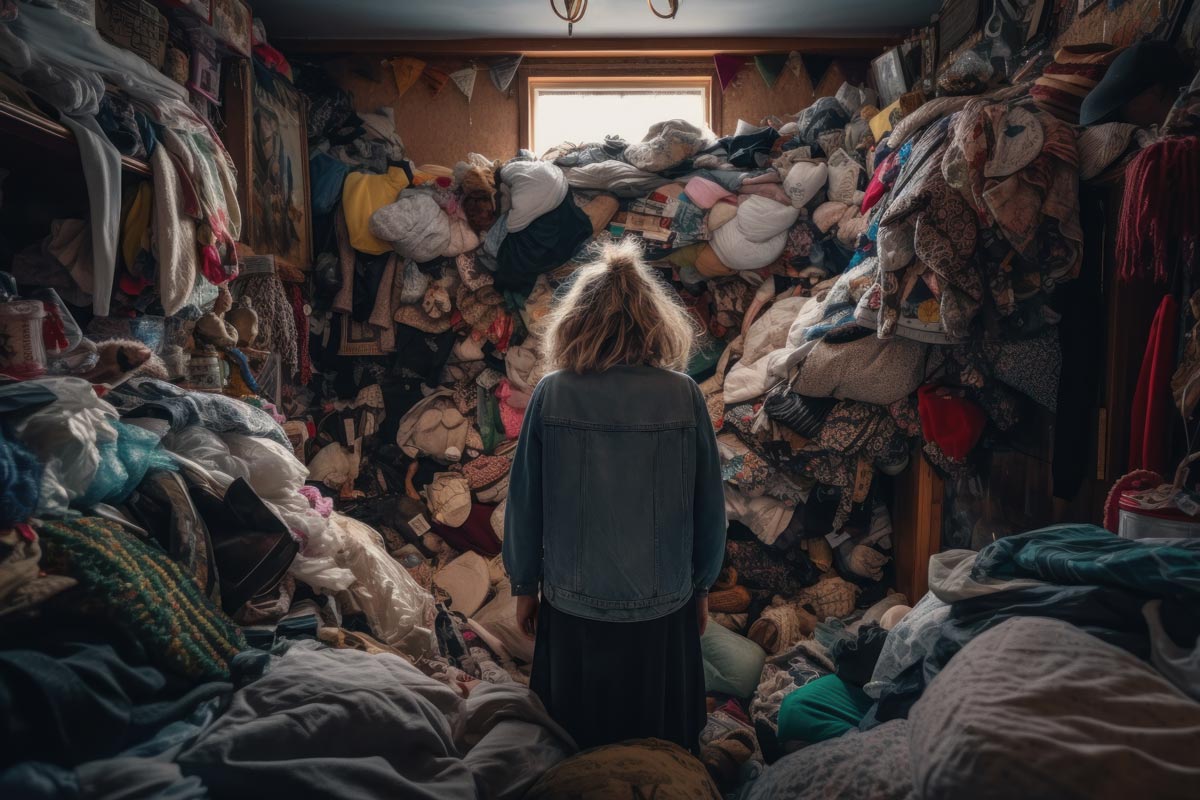
What It’s Really Like Living With a Hoarder Parent
Hoarding is often linked to quirky reality TV or extreme clutter—piles of pizza boxes, newspapers, and years of cat litter. But hoarding isn’t just found in rundown homes; it happens in nice neighborhoods too.
From the outside, it can be hard to believe. You might wonder, “How does anyone live like that?” or what it smells like. Then you change the channel and move on.
What many don’t realize is the emotional toll of living every day in a hoarded home—something that affects many people and shapes their adult lives.
As a child, I lived in a beautiful house overlooking the Pacific Ocean in Malibu. From the outside, it looked like paradise. Inside, it was a maze of boxes, bags, and clutter. Entire rooms were blocked off. Closets overflowed. Hallways narrowed by piles of things that simply couldn’t be thrown away.
Even simple trips to Costco left my father, brother, and me shaking our heads. My mom wouldn’t just buy two of everything—sometimes she’d bring home dozens. I remember eating Raisin Bran for over a year because she’d bought so many boxes—usually with the excuse, “It was on sale.”
My mother was a hoarder when I was a kid—and she still is. I’ve seen our home destroyed by wildfire, rebuilt beautifully, and then filled back up—floor to ceiling—once again. History repeated itself in real time. Thanks to financial security, my hoarder mom still rents storage units filled with belongings she hasn’t touched in over a decade.
People say home is where you feel safe. For me, home was where I learned to tiptoe—around objects and around emotions.
Psychological Impact of Growing Up With a Hoarder Parent
Hoarding takes over more than just space. It takes over relationships. It builds walls—both physical and emotional—between parent and child. I learned to hide my embarrassment, lie to protect my mom, and make excuses. Sometimes, my frustration made me act like a jerk. Mostly, I internalized the chaos—as if it were my fault.
Over time, some people start to believe:
“Maybe I don’t deserve a clean space.”
“Maybe I’m the problem for wanting normalcy.”
“Maybe I’m just too sensitive.”
But I reacted differently. Even as a kid, I wondered: What is going on here—and why won’t you get help?
That anger stayed with me. At home, my relationship with my mom was tense and defensive. I thought that was strength. It wasn’t.
The Shame of Living in the Mess
One vivid memory is how my mom reacted when guests came over. She’d tell my brother and me to clean our rooms. We were kids—five and ten. Our rooms weren’t messy—maybe a few clothes out or an unmade bed.
But we knew half the house was unlivable. Entire rooms filled floor to ceiling with stuff. Things no one had touched in years. Yet our slightly messy rooms were the problem.
She’d host beautiful dinner parties, showing off her culinary skills. Guests would praise the house. My brother and I would exchange looks, knowing the truth beneath the surface.
That contradiction was hard. She demanded spotless personal spaces for appearances while the rest of the house collapsed under clutter. It taught me a painful lesson: things mattered more than people.
Lasting Effects of Growing Up in a Hoarded Home
Even now, the effects appear daily. I wash dishes immediately after use. I get tense if my partner leaves dirty dishes—even after a lovely meal. Sometimes I obsess over how everything is arranged. Other times, I shut down and let the mess pile up.
The hidden cost of growing up like this is that clutter gets under your skin.
It shapes how you:
Form attachments
Set (or fail to set) boundaries
Handle shame and self-worth
Develop values based on appearances rather than feelings
It took years to realize: my mother’s hoarding wasn’t my burden to fix. Her illness wasn’t my identity. Separating her chaos from my self-image has been a journey.
Need Help Healing From a Hoarder Household?
If you grew up with a hoarder parent, I get it. I lived it. I’ve spent years unpacking the emotional weight it leaves behind.
You’re not broken for struggling. You’re not too sensitive. You grew up in an environment that didn’t meet your needs, and now you’re trying to make sense of it.
I coach people raised in chaotic, dysfunctional homes—especially those shaped by hoarding, emotional neglect, or hidden trauma. If you’re ready to stop carrying someone else’s disorder and start building a life that feels like your own, I can help.
Let’s talk. Let’s unpack what was never yours to carry—and make space for the life you deserve.
You don’t have to sort through this alone.
If any part of this story felt like yours, it’s because you’re not the only one.
And more importantly—you don’t have to keep living in the emotional clutter your childhood left behind.
I offer 1:1 coaching for people who grew up in homes where love and safety weren’t guaranteed—where appearances masked dysfunction, and silence was survival.
Together, we’ll turn your chaos into clarity, your shame into strength, and your past into power—not baggage.
👉 Click here to apply for coaching
Let’s make space for your life to begin.